
- 11, Sep 2026
Trekking season in Nepal is just getting started. The skies are clearing, the mountains are showing themselves again after the monsoon, and trekkers everywhere are starting to plan. If you are one of them, two names have probably already come up: Everest Base Camp and Annapurna Base Camp.
Both are extraordinary. Both will give you mountains you will think about for years. But they are not the same trip. They differ in altitude, difficulty, how long you need, what you will see along the way, what it costs and honestly how hard it will feel on day nine.
The short version: if you have limited time and want a shorter trek at a gentler altitude with a huge variety of landscapes, Annapurna Base Camp is probably your trek. If standing at the foot of the highest mountain on earth is the thing you have always wanted, and you can give it two full weeks, Everest Base Camp is hard to beat.
Let us go through both properly, because the details are what actually decide it. If you are still deciding whether trekking here is for you at all, our guide to trekking in Nepal is a good place to start.
Annapurna Base Camp: what makes it special
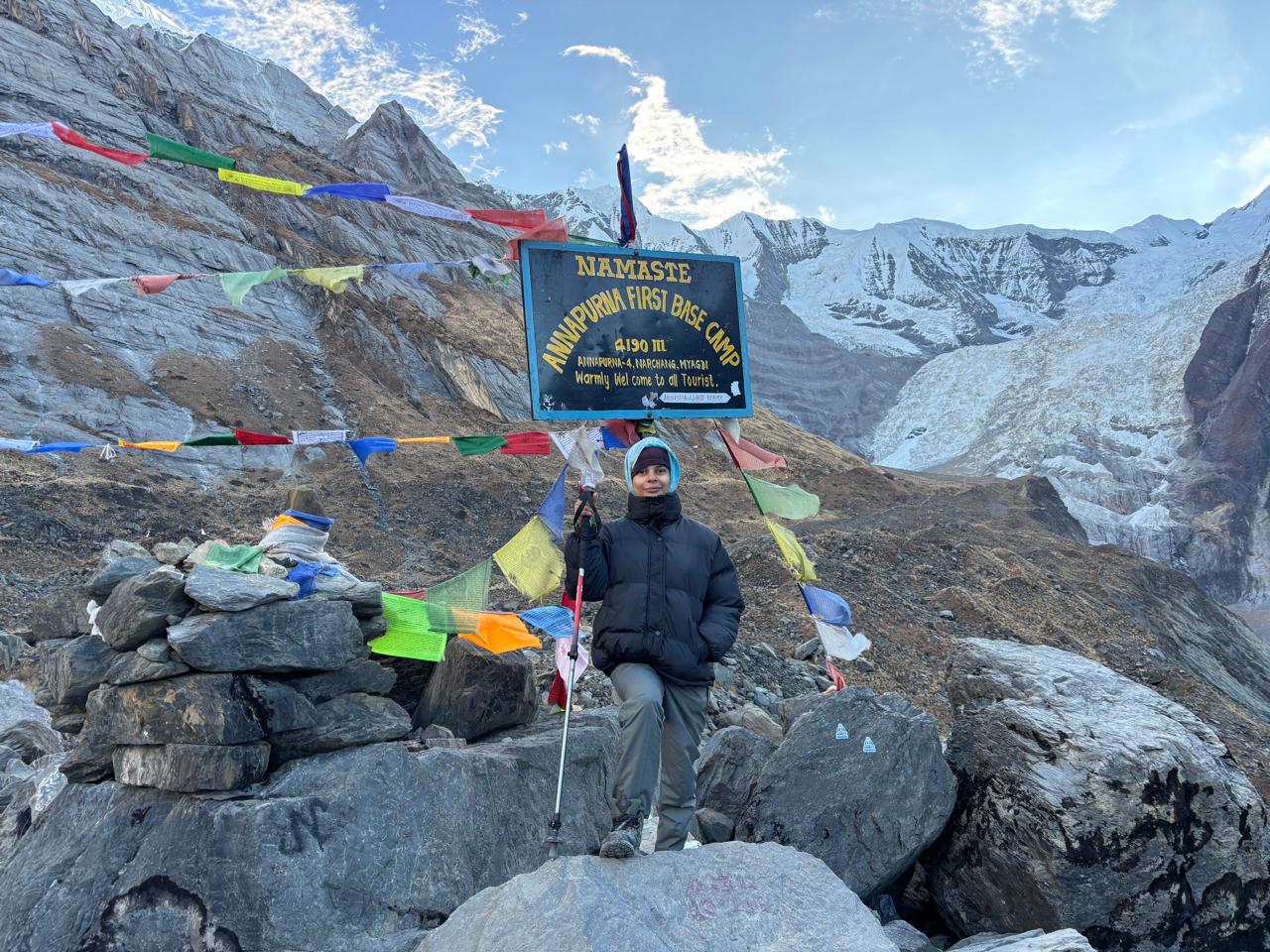
Annapurna Base Camp sits in Kaski District in Gandaki Province, inside the Annapurna Conservation Area, which is the largest protected area in Nepal. It is one of the most walked trails in the country, and once you have done it you understand why.
What people remember about ABC is the variety. You start among terraced fields and villages where people are farming the same slopes their grandparents farmed. You climb into rhododendron forest, thick and green, spectacular in spring when it flowers. Then the trees thin out, the valley narrows, and you walk into the Annapurna Sanctuary, a natural amphitheatre ringed by giant peaks. Very few treks change character that completely in a week.
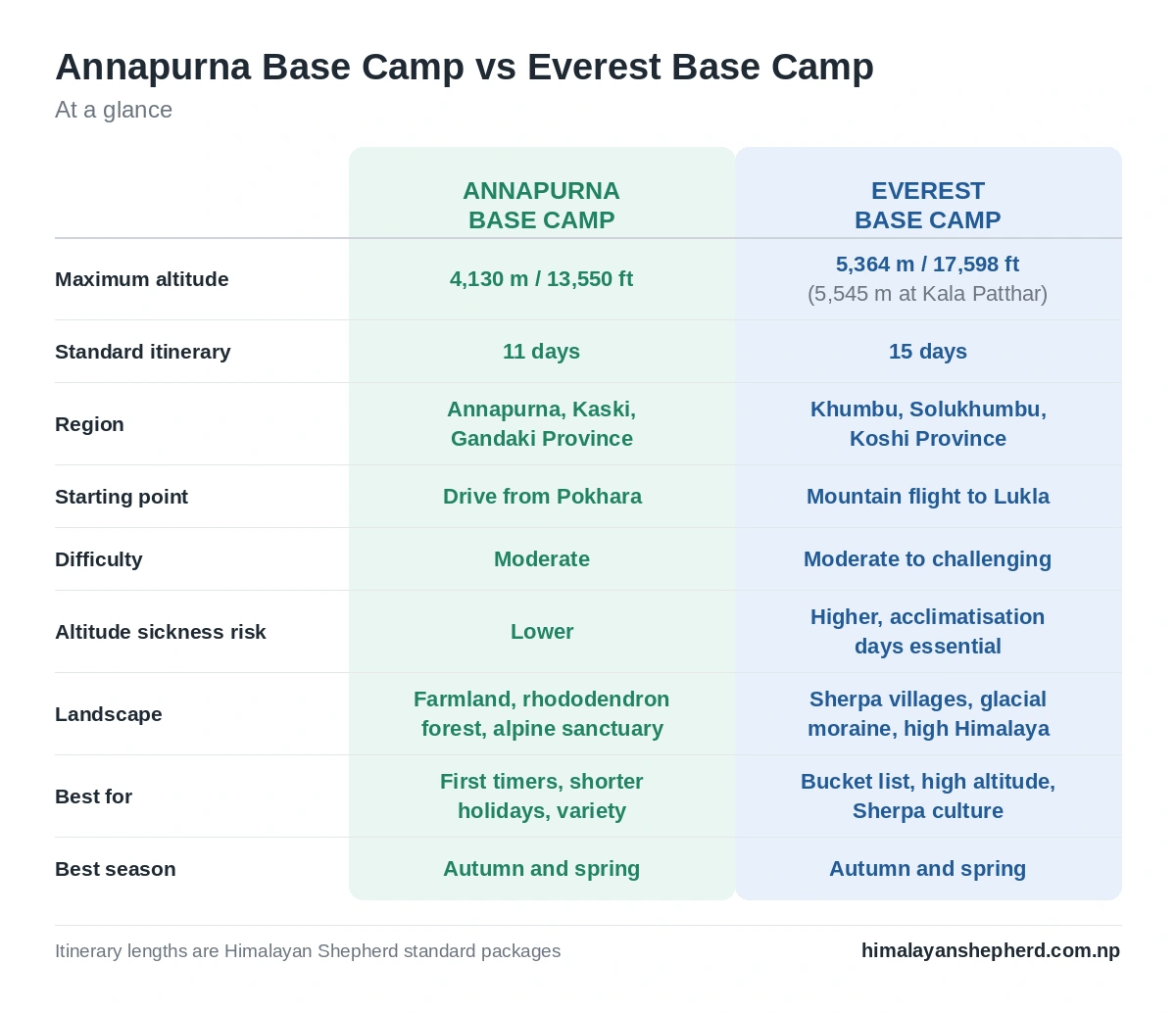
Base camp itself is at 4,130 metres, about 13,550 feet. Our Annapurna Base Camp Trek runs 11 days, though the walking section can be done in fewer depending on where you start and how fast you move. Along the way you get Annapurna I, Annapurna South, Hiunchuli and Machapuchare, the fishtail peak that follows you for most of the trek and somehow looks different from every angle.
-Have limited holiday time and cannot commit to two weeks
-Are coming to Nepal for the first time
-Want the Himalaya without going above 4,500 metres
-Like the idea of walking from green hills into high mountains in a few days
-Want a mix of mountain scenery and village culture
-Would rather avoid the altitude demands of the Everest route
-Want to add a few days in Pokhara at the end, which a Pokhara city tour makes easy
If even 11 days is too long, Mardi Himal and Ghorepani Poon Hill are shorter routes in the same region with seriously good views. We have also put together a list of short treks that fit a Dashain holiday if your window is tight. And if you want the sanctuary plus the famous sunrise viewpoint, there is a combined Annapurna Base Camp with Ghorepani Poon Hill itinerary.
Browse everything in the Annapurna region if you want to compare routes side by side.
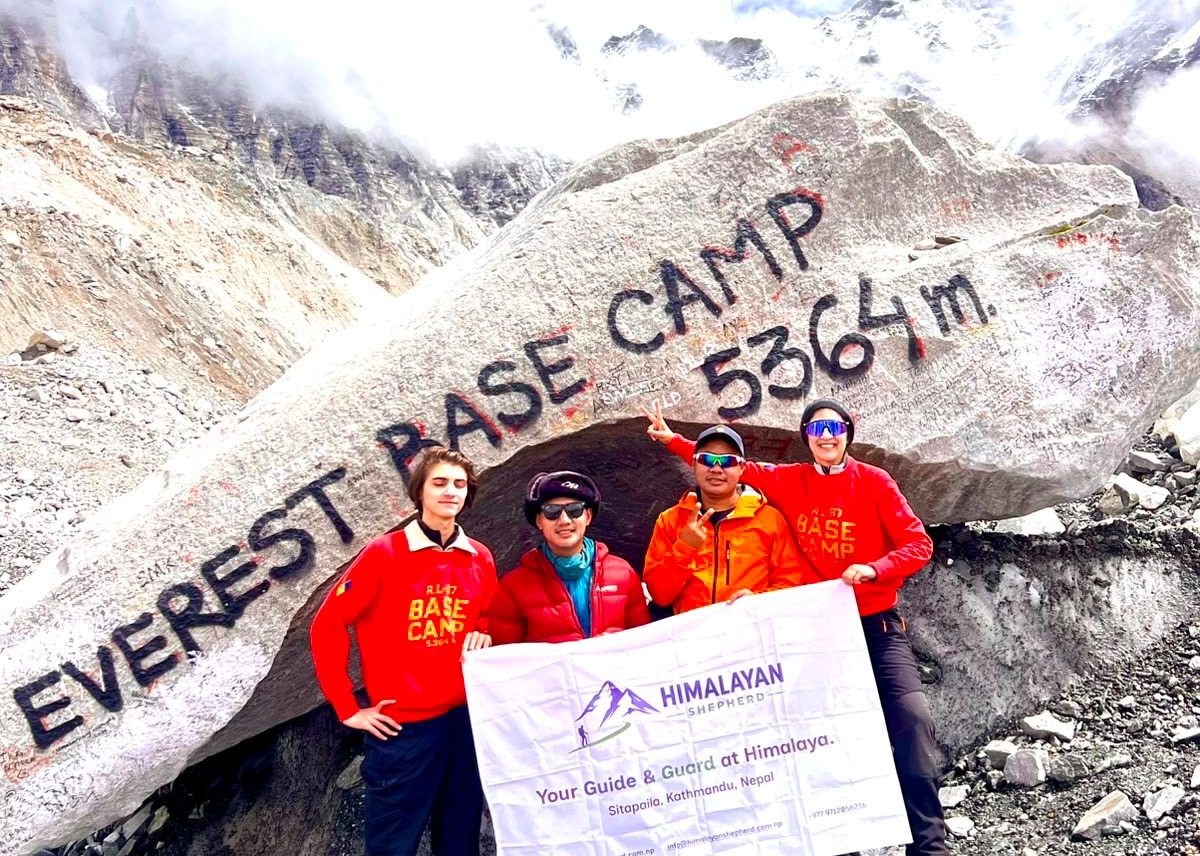
Everest Base Camp is in Solukhumbu District, Koshi Province, at 5,364 metres or 17,598 feet. That number is the whole story. It is more than a thousand metres higher than ABC, and above 5,000 metres your body works noticeably harder for every step.
The trek begins with the flight to Lukla, which is an experience on its own. From there the trail runs through Phakding, Namche Bazaar, Tengboche, Dingboche and Lobuche. These are working Sherpa villages, not stops built for tourists, and the Khumbu is one of the few places where the culture is as memorable as the mountains. The monastery at Tengboche alone is worth the walk.
You are inside Sagarmatha National Park, a UNESCO World Heritage Site, for most of the trek. Everest, Lhotse, Nuptse and Ama Dablam are all on show, and Ama Dablam in particular tends to steal the attention from Everest itself.
Our Everest Base Camp Trek runs 15 days, which includes the acclimatisation days at Namche Bazaar and Dingboche. Those days are not padding. They are the reason people finish. Most trekkers also climb Kala Patthar at 5,545 metres, which gives you the panoramic view of Everest that base camp itself does not.
It is a demanding trek. With sensible acclimatisation, a reasonable pace and a guide who knows the warning signs, it is also very achievable for a fit person with no mountaineering background. The Himalayan Rescue Association runs aid posts at Pheriche and Manang, and their advice on altitude is worth reading before you come.
If comfort matters, the Luxury Everest Base Camp Trek uses better lodges along the same route. If you want something bigger, the Gokyo Lake Trek adds turquoise glacial lakes, and the Everest Three Passes Trek is the serious option for experienced trekkers. All of it is listed under the Everest region.
Time. This settles it more often than anything else. Fifteen days plus flights means roughly three weeks away from home. If you cannot do that, ABC is not a compromise, it is simply the trek that fits.
Altitude. The gap between 4,130 and 5,364 metres is significant. Altitude sickness is not about fitness, it is about how your body handles thin air, and nobody can predict it in advance. If that worries you, start lower.
The flight. Lukla is weather dependent. Delays happen, sometimes for a day or two, and you need buffer days in your plan. ABC starts with a road drive from Pokhara, so there is nothing to cancel.
Cost. EBC costs more, mainly because of the Lukla flights, the extra days and the higher price of food and lodging as you go up. ABC is the more economical trek by a clear margin.
What you want to look at. ABC gives you a tight amphitheatre of peaks and a landscape that changes daily. EBC gives you scale, glaciers, altitude and the Khumbu. Different rewards, both worth having.
Then consider a third option. The Langtang Valley sits closer to Kathmandu, needs less time than either base camp trek, and is far quieter than both. Plenty of people who came for Everest end up recommending Langtang to their friends.
Whichever you pick, both trails give you mountains that stay with you, villages that change how you think about hard living, and the kind of tiredness that feels earned. Look honestly at your time, your fitness, your budget and what you actually want out of the trip, then book the one that matches. The Himalaya will hold up its end.
If you want help deciding, tell us what you are working with and we will recommend an itinerary honestly, including telling you when a shorter trek would serve you better. You can also find your trip or check our FAQs for permits, insurance and packing.
Which trek is easier, Annapurna Base Camp or Everest Base Camp?
Annapurna Base Camp. It tops out at 4,130 metres against 5,364 metres at Everest Base Camp, takes fewer days and carries a lower altitude sickness risk, which makes it the better first Himalayan trek for most people.
How many days does each trek take?
Our Annapurna Base Camp package runs 11 days and our Everest Base Camp package runs 15 days, including the acclimatisation stops at Namche Bazaar and Dingboche.
What are the altitudes?
Annapurna Base Camp is around 4,130 m (13,550 ft). Everest Base Camp is around 5,364 m (17,598 ft), with an optional climb to Kala Patthar at 5,545 m for the best panoramic view of Everest.
Which is better for a first time trekker?
Annapurna Base Camp, in most cases. Lower altitude, shorter itinerary, gentler daily gains and the option to finish with a few days in Pokhara.
Do I need permits?
Yes. ABC needs an Annapurna Conservation Area Permit. EBC needs a Sagarmatha National Park entry permit plus the Khumbu Pasang Lhamu Rural Municipality permit. We arrange all permits as part of the package.
When is the best season?
Autumn, from late September to November, gives the clearest views and the most stable weather on both routes. Spring, March to May, is the second window, with rhododendron in bloom on the Annapurna trails.
Learn how to prevent altitude sickness on Himalayan treks in Nepal, including AMS symptoms, acclimatization, hydration, safe ascent rates, and Diamox.

Comparing the Manaslu Circuit and Annapurna Circuit on crowds, difficulty, and scenery, so you can pick the right Nepal trek for your style and experience.

Nepal is a dream destination for trekkers from around the world. Home to eight of the world's fourteen highest peaks
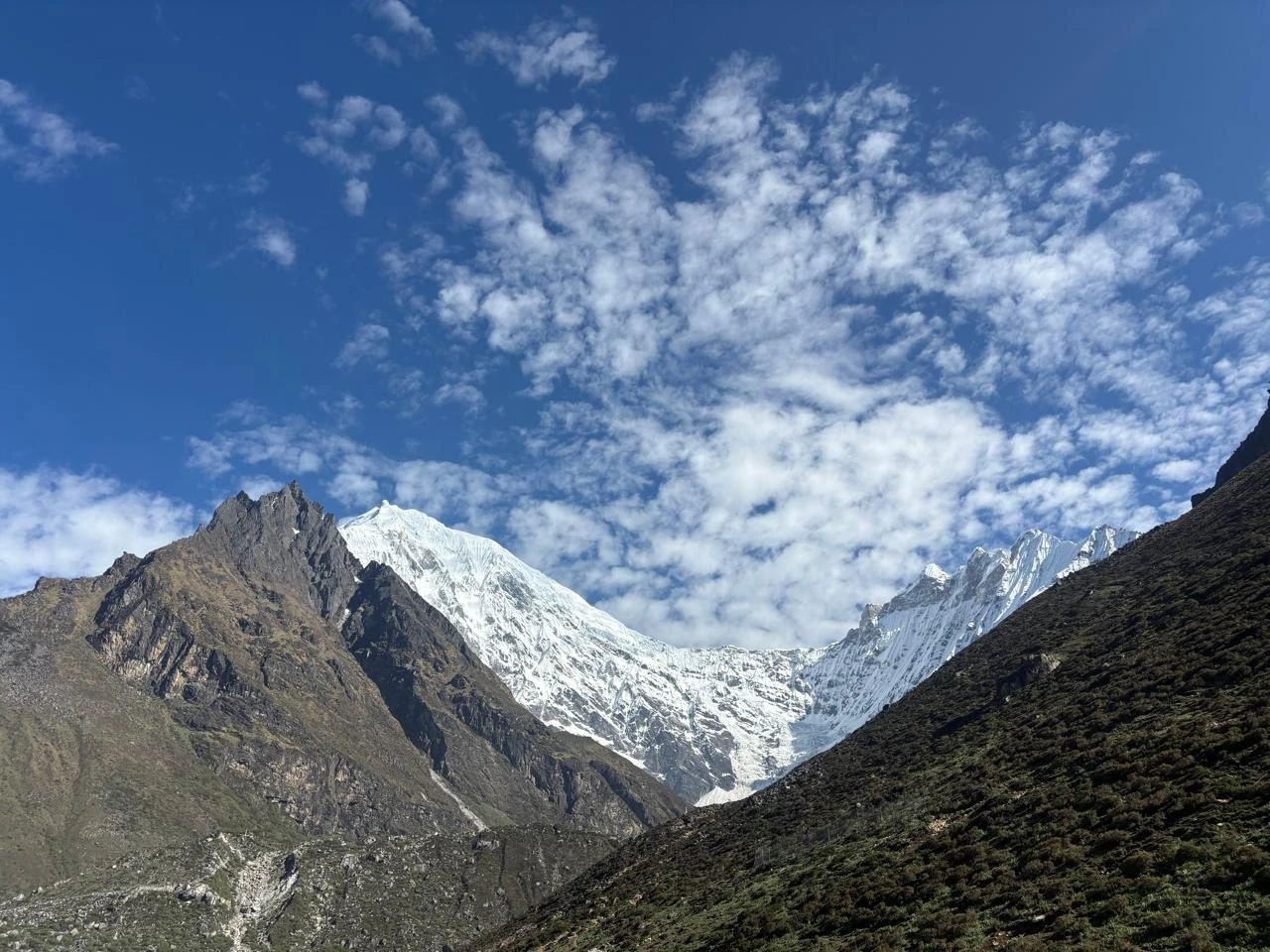
I recently completed the Langtang Valley Trek in just six days. Those six days turned out to be some of the most unforgettable days of my life.
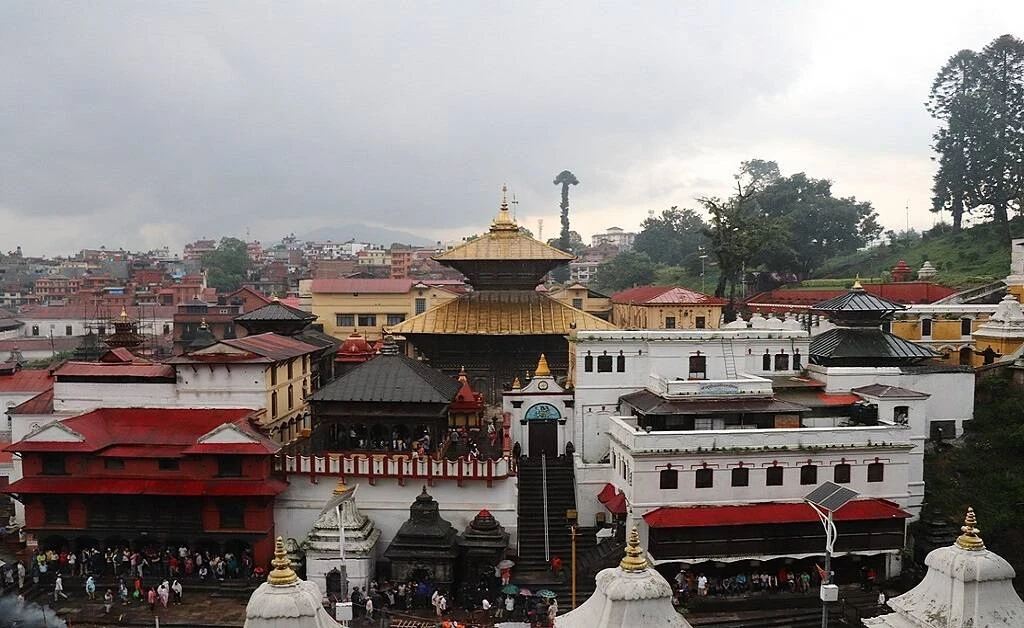
Nepal is more than just the home of the Himalayas. It is a sacred land where spirituality, culture, and history come together in perfect harmony.
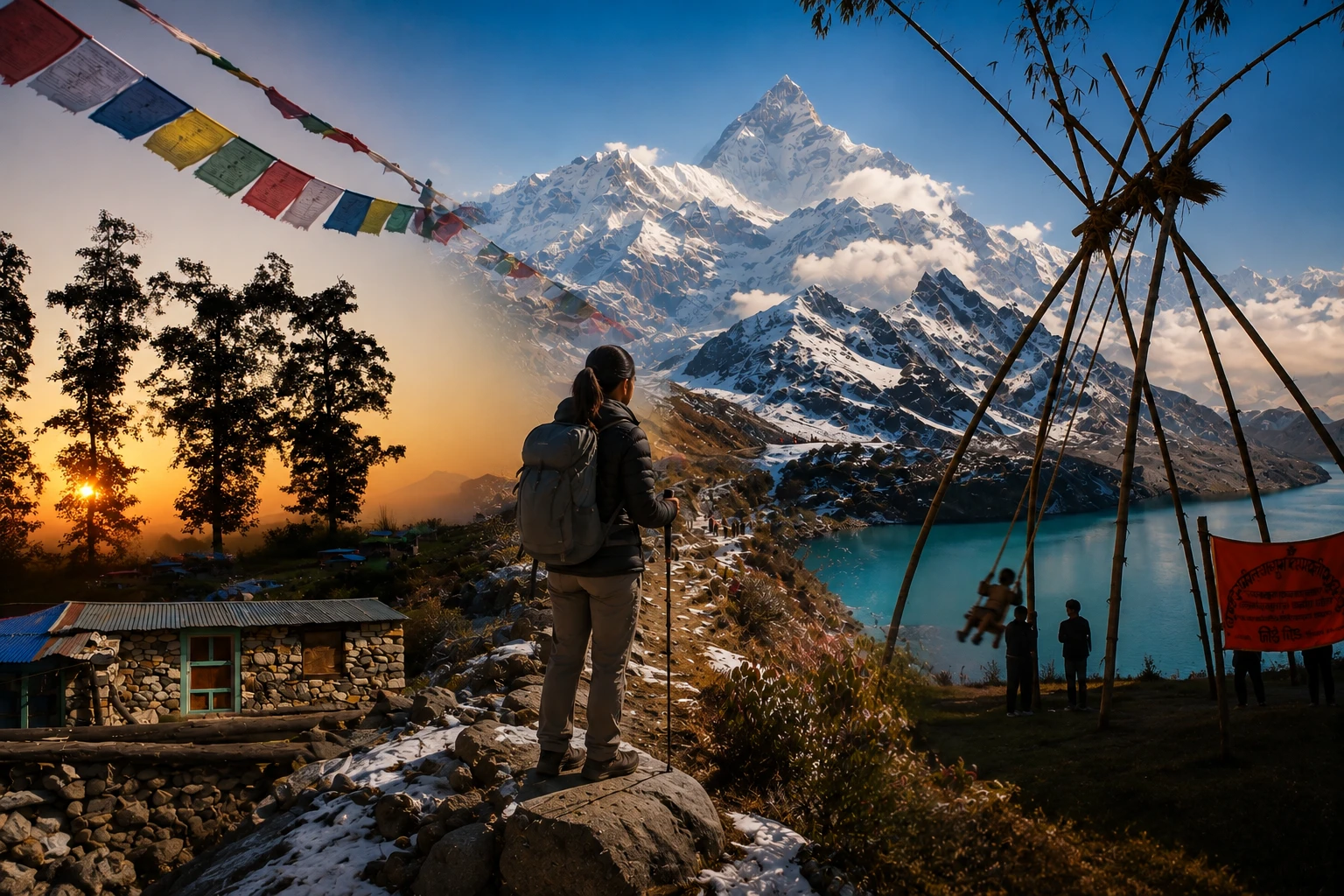
In this blog, we have selected 6 of the best short treks in Nepal that you can take during your Dashain holidays.
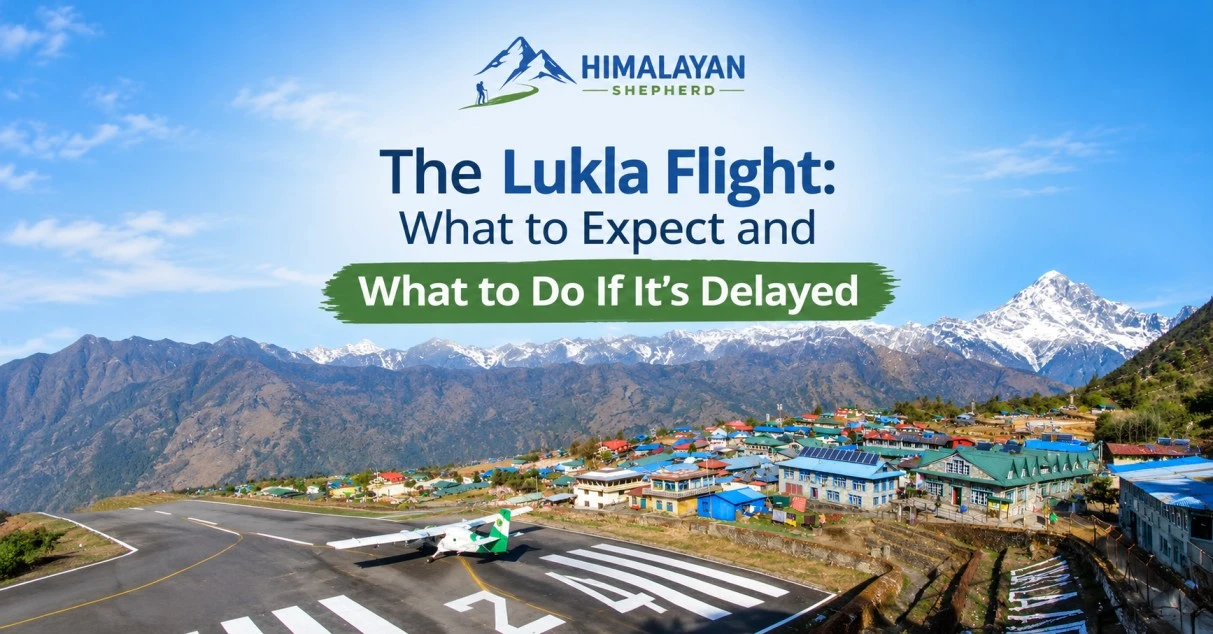
Flying to Lukla for Everest Base Camp? Learn what the flight is like, baggage rules, why delays happen and exactly what to do if yours is cancelled.